제3편 [장 × 열] Paste × Heat
장을 물에 풀기 전, 한 번 볶아보면 무엇이 달라질까?
What changes when paste meets oil and heat before water?
2. 오늘의 질문
Today’s Question
같은 장도 왜 어떤 때는 볶고, 어떤 때는 바로 풀어 넣을까요? 저는 여기에서 ‘무엇을 넣었는가’ 못지않게 ‘언제, 어떤 상태에서 열을 만났는가’를 중요하게 봅니다.
Why do we fry some pastes first, while others go straight into the broth? In my cooking, the question is not only what we use, but also when—and under what conditions—that ingredient meets the heat.
3. Chef’s Experience
제가 주방에서 중요하게 생각하는 것 중 하나는 레시피에 잘 적혀 있지 않은 ‘순서’입니다. 같은 된장이라도 바로 육수에 풀 것인지, 기름에 먼저 볶을 것인지에 따라 결과가 달라집니다.
One thing I care about in the kitchen is sequence. The same doenjang can behave differently depending on whether it goes straight into the broth or meets oil first.
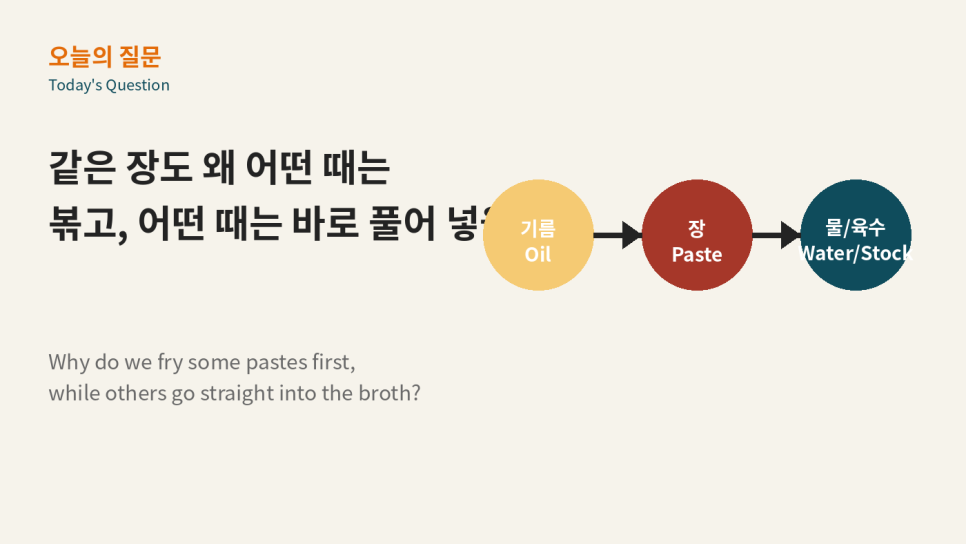
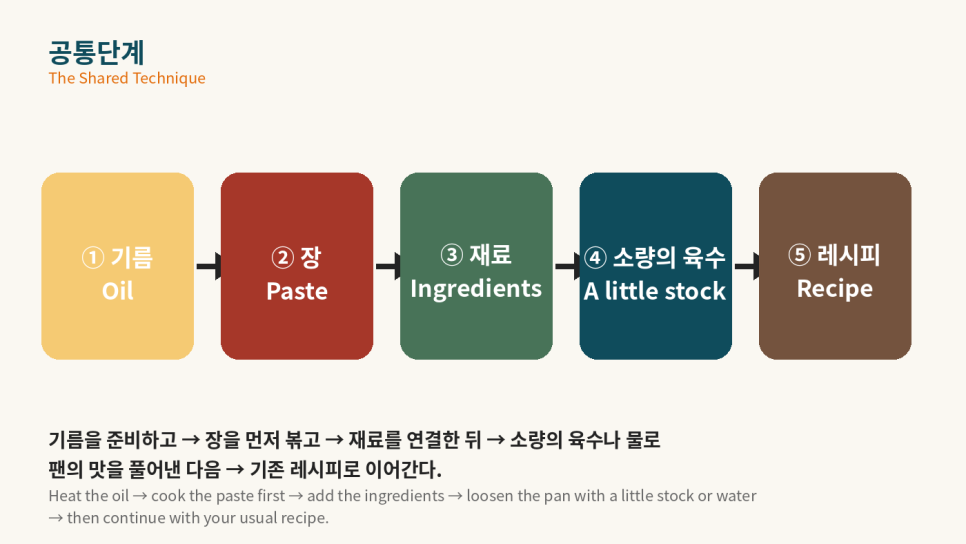
기름 → 장 → 재료 → 소량의 육수 → 기존 레시피 oil → paste → ingredients → a little stock → continue the recipe
이 짧은 과정이 요리의 첫 번째 맛의 층을 만든다고 느낍니다.
To me, this short sequence creates the first layer of the dish.
4. 왜 그럴까?
Why?
제가 흔히 “응축된 감칠맛을 열로 끌어낸다”라고 표현하는 것은 셰프로서 맛을 설명하는 방식입니다. 과학적으로는 장이 원래 가진 맛과 향이 기름, 수분, 시간, 온도에 따라 다르게 드러난다고 보는 편이 더 정확합니다.
When I say that heat “draws out the concentrated flavor,” I am describing what I experience as a cook. A more careful view is that the paste already carries flavor, and heat changes how that flavor is expressed through fat, moisture, time, and temperature.
즉 ‘장 × 열’은 열을 가하면 없던 감칠맛이 마법처럼 생긴다는 뜻이 아닙니다. 장에 들어 있던 맛을 바탕으로 향, 농축감, 볶은 느낌, 주변 재료와의 결합 방식이 달라지는 조리 경험에 가깝습니다.
Paste × Heat does not mean that heat magically creates umami from nothing. It is about how cooking changes aroma, concentration, roasted character, and the way the paste integrates with the rest of the dish.
장 × 열 × 기름 × 수분 × 시간 paste × heat × fat × moisture × time
5. 직접 해보세요
Try It Yourself
공통단계
The Shared Technique
1) 팬이나 냄비를 예열하고 요리에 맞는 기름을 준비합니다. 2) 장을 바로 물에 풀지 않고 먼저 기름에서 천천히 볶아봅니다. 3) 채소나 고기 등 실제 요리에 들어가는 재료를 넣어 함께 볶습니다. 4) 육수나 물을 한꺼번에 붓기 전에 조금만 먼저 넣어 팬에 남은 장과 기름을 풀어 재료와 연결합니다. 5) 그 다음부터는 원래 사용하던 레시피를 이어갑니다.
Heat the pan and prepare the oil. Cook the paste gently before adding the main liquid. Bring in the ingredients, then add a small amount of stock or water first to loosen the concentrated flavor from the pan. From there, continue with your usual recipe.
한국요리 — 된장찌개 · 고추장찌개
Korean Cooking — Doenjang Jjigae · Gochujang Jjigae
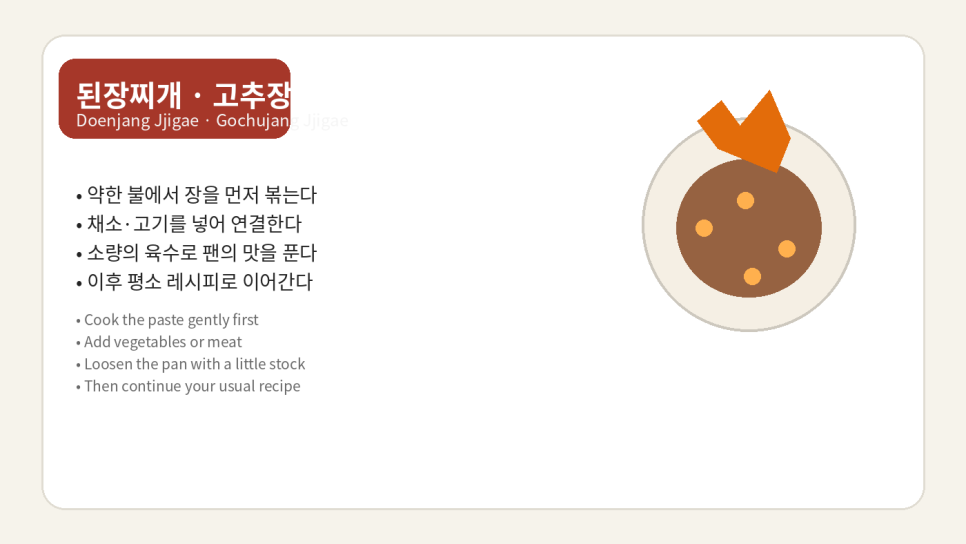
된장이나 고추장을 약한 불에서 먼저 볶고, 채소나 고기를 연결한 뒤 소량의 육수로 팬의 맛을 풀어줍니다. 그 다음 평소 하던 찌개 레시피로 이어갑니다. 바로 육수에 장을 풀었던 방식과 비교해보세요.
Cook the doenjang or gochujang gently first, connect it with the vegetables or meat, then loosen the pan with a little stock before continuing with your usual stew recipe. Compare it with the version where the paste goes directly into the broth.
재미있는 응용 — 라면
A Fun Variation — Instant Ramen
라면 스프는 장은 아니지만 같은 사고방식을 시험하기 좋은 사례입니다. 소량의 기름에 스프를 짧게 볶고 파, 마늘, 양파 같은 재료를 더한 뒤 물을 넣어 평소처럼 끓여봅니다.
Ramen seasoning is not a paste, but it is a useful way to test the same idea. Briefly cook the seasoning in oil, add aromatics, then add water and compare it with the standard method.
윤남노 셰프가 공개한 라면 조리에서도 식용유에 스프를 먼저 볶은 뒤 액체를 연결하는 과정이 소개됐습니다. 저는 이 장면을 보고 “이것도 내가 장을 사용할 때 생각하던 원리와 비슷한데?”라고 생각했습니다. 정답이라는 뜻이 아니라, 직접 비교해보자는 겁니다.
A ramen method shared by Chef Yoon Nam-no also begins by cooking the seasoning in oil before adding liquid. When I saw it, I thought, “This is close to the way I think about cooking pastes.” It is not a universal answer—it is something worth testing.
참고 영상 / Reference video: https://video.daum.net/shorts/view/451545333
이탈리안 요리 — 토마토소스
Italian Cooking — Tomato Sauce
올리브오일에 마늘이나 향신료로 향을 낸 뒤 토마토 페이스트를 넣습니다. 바로 물이나 소스에 풀기보다 먼저 기름에서 천천히 볶으며 향과 색의 변화를 관찰합니다. 양파 등 부재료를 연결하고 소량의 물이나 육수로 팬의 페이스트를 풀어준 뒤 평소 소스 레시피를 이어갑니다.
Build aroma in olive oil, then add the tomato paste. Observe the change in aroma and color before adding the main liquid, connect it with the other ingredients, and continue into your usual sauce.
중국요리 — 마파두부 / 짜장
Chinese Cooking — Mapo Tofu / Jjajang
식용유나 라드에 파, 마늘 등 향채를 볶고 두반장이나 춘장을 넣어 볶습니다. 이후 고기와 재료를 연결하고 육수나 물을 더해 소스를 만들어갑니다.
Build aroma in oil or lard, cook the doubanjiang or chunjang, connect it with the meat and other ingredients, then build the sauce with stock or water.
장을 넣었다는 사실보다, 그 장이 어떤 기름과 열을 먼저 만났느냐. The ingredient matters—but so does the oil and heat it meets first.
그런데 모든 장을 이렇게 해야 할까?
Does Every Paste Need This?
아닙니다. 모든 장을 무조건 볶아야 하는 것은 아닙니다. 미소처럼 장 자체의 향을 살리고 싶은 요리에서는 조리 후반에 넣는 방법이 더 어울릴 수 있습니다.
No. Not every paste should be fried first. In dishes where preserving the characteristic aroma of a paste such as miso matters, adding it later may make more sense.
6. FBF Point

열을 이용해 장의 응축된 맛과 향을 한 번 끌어내는 과정. 제가 요리를 하면서 느끼기에는 이 짧은 과정 하나가 전체 요리의 맛과 풍미를 완전히 다르게 만들 때가 있습니다. 그리고 집에서도 충분히 해볼 수 있습니다.
One short step—letting a concentrated paste meet oil and heat before the rest of the dish—can change the character of the entire meal. And you can absolutely try it at home.
무엇을 넣을까? 그 다음에는 언제 넣을까? Don’t only ask “What should I add?” Ask one more question: “When should I add it?”
7. Puzzle Connection
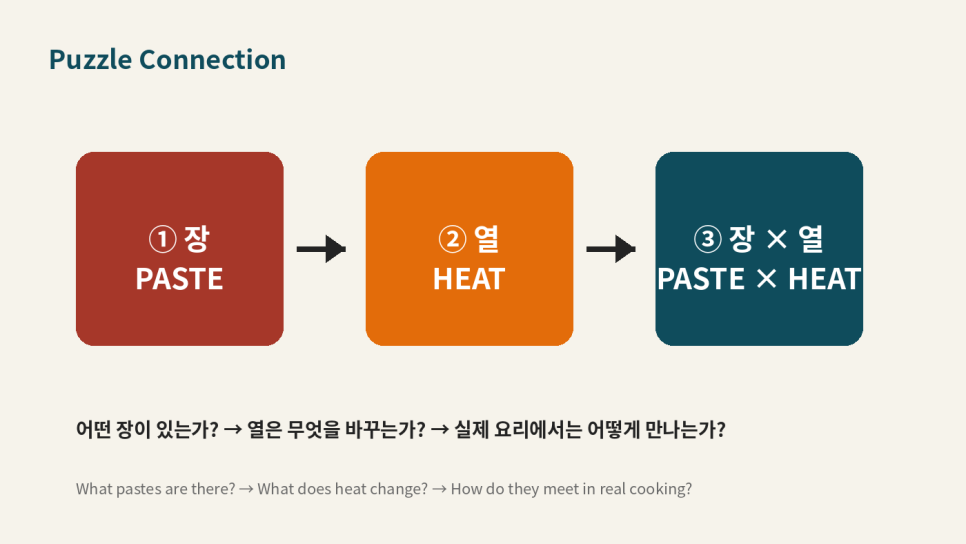
#01에서는 어떤 장이 있는지 살펴봤고, #02에서는 열이 맛과 향을 어떻게 바꾸는지 생각했습니다. #03에서는 두 조각을 실제 요리에서 연결합니다.
#01 explored what pastes are. #02 explored what heat can change. #03 brings those two pieces together in real cooking.
8. 다음 퍼즐
Next Puzzle
같은 팬, 같은 불, 같은 고기. 그런데 냉장고에서 바로 꺼낸 고기와 미리 중심 온도를 올린 고기는 왜 다르게 익을까요? 다음에는 ‘재료의 온도 × 열’을 살펴봅니다.
Same pan. Same heat. Same piece of meat. But what happens when the ingredient starts at a different temperature? Next: Ingredient Temperature × Heat.
댓글로 함께 만들어보세요
Let’s Build the Next Puzzle Together
이 방법을 어떤 요리에 적용할 수 있을지 궁금하다면 댓글로 남겨주세요. 김치찌개, 순두부찌개, 짜장소스, 피자소스, 미트소스처럼 장이나 페이스트를 직접 사용하는 요리부터, 카레나 죽처럼 같은 열·기름·재료·수분의 순서라는 관점에서 다시 볼 수 있는 요리까지 함께 살펴보겠습니다.
If you have a dish you would like to test with this way of thinking, leave it in the comments. From stews, jjajang sauce, pizza sauce, and meat sauce to curry or porridge, we can turn it into another piece of the FBF puzzle.
출처와 참고자료
Sources & References
라면 참고 영상 — 윤남노 셰프 관련 외부 영상 — 링크/임베드 우선, 캡처 재배포는 지양
댓글
댓글 쓰기